
Public Speaking as a Management Skill
This page may contain links to Amazon.com or other sites from which I may receive commission on purchases you make after clicking on such links. Read my full Disclosure Policy
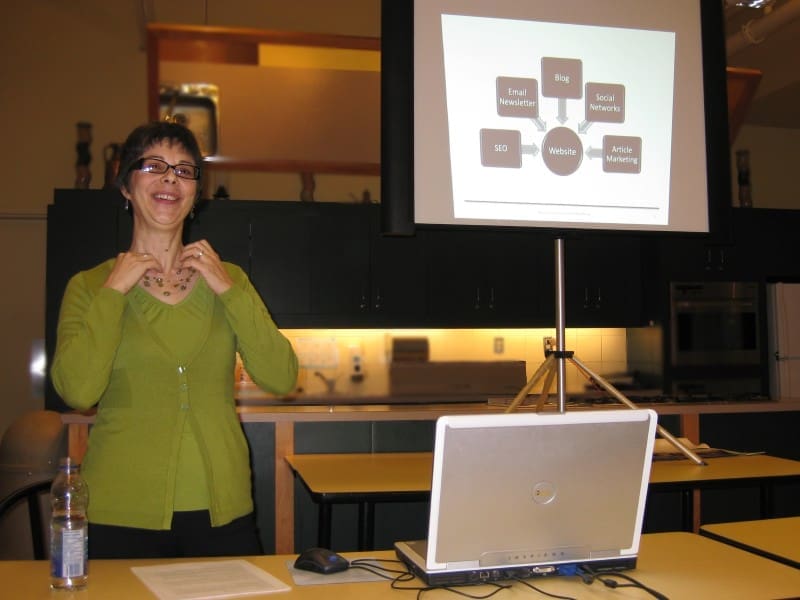
During Improve Management Skills Month, I’ve committed to sharing some ideas and resources about some of the essential skills required to successfully manage a business, and today I will address public speaking. As a small business owner, there are many occasions when you may be called upon to speak in public.
Many people are terrified of public speaking and would never for a moment consider an opportunity to deliver a workshop or even a short presentation. That is understandable. According to various sources, about 75% of the population has a fear of public speaking. Jerry Seinfeld talked about this in one of his comedy bits.
You can probably avoid formal speaking engagements for your whole life if it’s really not your cup of tea, but it’s next to impossible to promote your business without ever standing up in front of a group and speaking for at least 30 seconds. Many business networking events include a segment where everyone has a chance to introduce themselves and say a little bit about their business, and to benefit from these opportunities, you need to prepare by developing a message that clearly defines what you do and the type of referrals you’re looking for. Knowing in advance what you’re going to say when it’s your turn to stand up will help you to handle the situation professionally and with confidence.
Once you’re comfortable introducing yourself to a group, you just might want to stretch yourself and try giving longer presentations. Local groups are always looking for speakers, and this can be a fabulous way to get your name in front of prospective clients.
You will also be required to speak to groups if you assume a leadership role in your professional association or any other organization, so rather than avoid it, you may as well learn how to overcome your fear and get up there!
Self-Promotion for Introverts® by Nancy Ancowitz is an excellent book for anyone who is intimidated by public speaking, particularly those of us who are inwardly focused. In addition to help crafting your “elevator pitch,” it includes an entire chapter (over 30 pages) of public speaking tips and strategies, complete with exercises. Here’s an excerpt:
From creating failsafe speaker’s notes to rehearsing aloud to checking out the venue in advance, you can arrive at a presentation ready to deliver your best… Arrive at your presentation grounded so that you can be focused on your message yet relaxed enough to adjust on the spot. Once you hit your stride, you probably won’t feel as if you’re giving a big, scary presentation.
Of course, just reading about public speaking isn’t going to give you the confidence to actually do it, but it may encourage you to take the next step.
Thousands of people around the world belong to Toastmasters, and the members I’ve spoken to say that it benefits them both personally and professionally. I once co-presented with a Toastmasters member, and I learned strategies from her that I continue to use to this day.
If your schedule and/or your budget won’t allow you to join Toastmasters, check and see if your local high school or community college offers classes on public speaking. I signed up for a free seminar, and although there wasn’t enough time for everyone to speak in class, I was able to pick up some valuable tips in a safe environment.
If you’re more comfortable with one-on-one support, you might want to consider working with a speaking coach.
I’m sure some of you are still shaking your heads and saying, “Not me – I could never speak in front of a group!” Keep in mind that many of the polished speakers you’ve heard in your life were probably afraid to stand up and speak at one time. Believe me, the first time I was invited to speak somewhere I was terrified, and although I’m still a little nervous when I speak, it does get easier each time.
Once you get known as an expert in your field, people will even be willing to pay for you to come and speak for their organization. The great thing is, once you’ve developed your material for one presentation, you can reuse it for other groups, reworking it as needed. That same material can also be developed into articles, teleclasses, e-books, and maybe even a book!
Public speaking can help you grow, both personally and professionally. You become a more effective communicator, more confident, and a better manager.


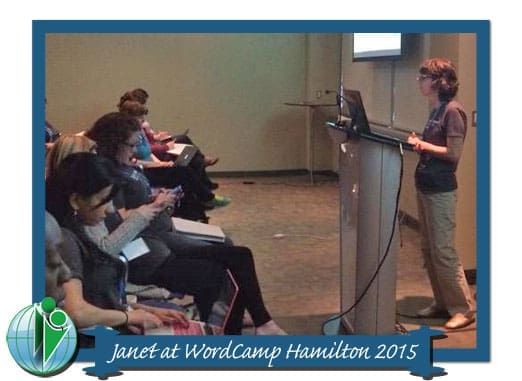

I agree that Toastmasters is one of the best ways to learn and get practice and constructive feedback in the beginning. Most people there will be in the same boat as you and they want you to succeed.
I’ve never heard anyone that went to Toastmasters say it wasn’t worth their while. I can’t think of any other organization of which that’s true!
Public speaking is not that hard, you just need to know your speech and your audience. And also, you should know what you’re talking about. Just memorize your speech and practice all over again and you’re already good to go.
For me, the hardest part is the anticipation. I’m usually pretty stressed out weeks leading up to a major speaking engagement, even if I’m prepared, but once I stand up and start talking, it’s usually a lot of fun!
That Jerry Seinfeld clip is so funny. And I guess, true. So many people are afraid of public speaking. I get it. There was a time when I was afraid, too. But I got over it.
I still remember one of my first big speaking gigs. It wasn’t the first time I spoke in public, but it was the first time I presented to a large group – hundreds of people at a computer graphics conference. That was my field before becoming an organizer. As I was being introduced, I was sooo nervous. I felt like I was going to throw up. I heard my name, walked up to the front of the room, looked out at the hundreds of people (who were completely quiet,) and started to talk. It was such a wonderful experience. There was great interaction, lots of good questions, and I was buzzing after. There’s more to the story, but I leave it there for now.
The point is, you can definitely get over the fear. And on the other side, there is something wonderful waiting.
Linda, I love the way you word things! “There is something wonderful waiting” is much more inspiring than “you will find it beneficial.” 🙂